
Wintering the storm
Lessons From the Storm
Today marks six years since I boarded a one-way flight to this island at the height of the pandemic.
This morning, I sat with my old journals, revisiting the person I was before the world shifted its axis. Before the stage lights dimmed. Before the set changed.
Yesterday I walked my farm to assess the damage from the recent Kona Low storm, one of the most intense tropical systems we've seen this year. The storm rolled through just one week before spring.
Beds flattened. Infrastructure twisted. Crops drowned.
A full season of intention rearranged overnight.
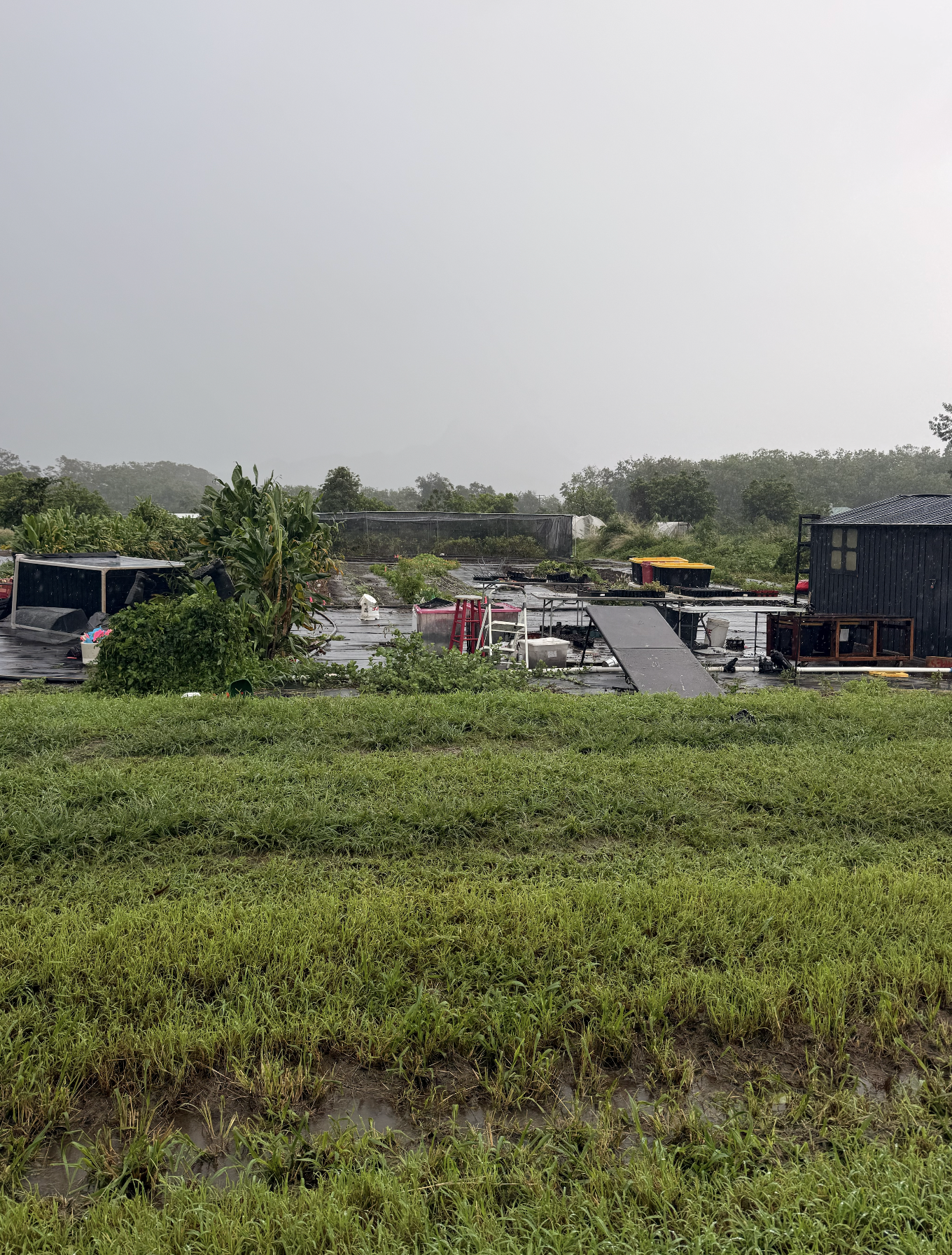
I spent the day dissociating. Watching TV. Hiding inside other work just to quiet my mind. When you build something with your hands and watch it collapse, the brain goes into a strange intermission.
Today I woke up with a decision: quit or not.
The beauty of how I arrived here is that I can leave just as easily. I come from transient people. Home has never been a location, it's a feeling.
And if I'm honest, this island has never quite felt like home.
When I arrived, I wasn't searching for community or belonging. I was exhausted.
For a decade I organized productions, races, fitness classes, magazines, endless events for people who rarely said thank you or understood the labor behind the curtain. I grew up on stage entertaining audiences, yet somehow still felt empty when the applause faded.
Then I spent my career selling people things in a country built on convincing you that fulfillment is always one purchase away.
But it never arrives.
Consumerism is a performance with no closing night. An endless act of wanting.
And that question started living in my head like a botfly:
If everything else in nature gives and is rewarded for it, why are humans so hungry to take, yet still feel starved?
So I started an experiment. Not in theory. In practice.
Agriculture became my laboratory for human behavior.
My career has never followed a straight line of accolades. It's been more like a wandering rehearsal, trying roles, testing scripts, studying how much power people surrender while believing they're in control.
Moving here didn't start my farming journey, but it gave it purpose.
Yesterday, while avoiding my reality, I rewatched the documentary series Live to 100: Secrets of the Blue Zones. Most people talk about the diet, the movement, the community. But the thing that struck me hardest was purpose.
Purpose extends life.
For six years I've woken up with one: get local food to people and bring humans back to the table.
In the beginning it was Google searches and borrowed books. Halfway through, it was applications, every program I could find, until I landed at GoFarm Hawai’i, which helped me understand the local food system and where the real voids live.
This past year I've been up before sunrise most days, planning, prepping, studying weather patterns, trying to grow food for people who may never know my name.
Six years after arriving. One year after establishing this farm. And yesterday, during my first real storm, I thought about quitting.
It was a brief thought.
Because before I could spiral too far, I posted photos of the damage online and carried on with my day.
This morning I woke up to something unexpected: deposits in my account. People quietly sending support. Love, translated into survival.
Which reminded me of a few things.
1. Closed mouths don't eat
Had I stayed silent, this post wouldn't exist.
The road ahead felt pitch black yesterday. But community has a strange way of turning the lights back on.
To everyone who sent a small love token: thank you. Truly. Your generosity bought more than seeds and supplies. It bought clarity.
2. Trust your foundation
Ironically, the physical foundation of my farm didn't hold. You can't anchor much in a temporary field with no windbreak and a storm barreling across the Pacific.
But that's not the foundation I'm talking about.
The real foundation is intention. Why you build. Who you build for.
I designed this farm as a communal stage, an open set where anyone willing to put their hands in the soil becomes part of the production. I might be writing and directing this agricultural play, but I didn't build it alone. There's an ensemble now. And when the storm knocks down the set pieces, the show still goes on.
3. For their children's children
We live in an era of immediacy. Instant inspiration. Instant gratification. Instant relationships. Quick fixes for deeper voids.
But farming refuses that timeline.
This work isn't for today's consumer habits. It's for tomorrow's inheritance.
So when I rebuild, I'm not rebuilding for applause. I'm rebuilding for people who aren't even born yet.
That's generational work. And it's powerful fuel.
4. Experience is everything
I've been almost every job I ever dreamed about. Not because I didn't know who I wanted to be, but because I wanted enough experience to have an informed opinion about it.
Experience demands trial. And a lot of error. But it's the greatest teacher we have.
I can't quit yet because I haven't experienced everything this chapter has to teach me. I'm still growing. And if you're reading this, you're growing with me.
I've known heartbreak and setbacks before. But learning how to keep your mind steady when the set collapses, that's the real lesson.
This farm will rebuild. Stronger than its first iteration.
Because in life, problems are inevitable.
But endurance? That's the real harvest.
